Florida Career College to Close Doug Lederman Fri, 01/26/2024 - 03:00 AM Byline(s) Doug Lederman from Inside Higher Ed https://ift.tt/avZRfLi
Image:
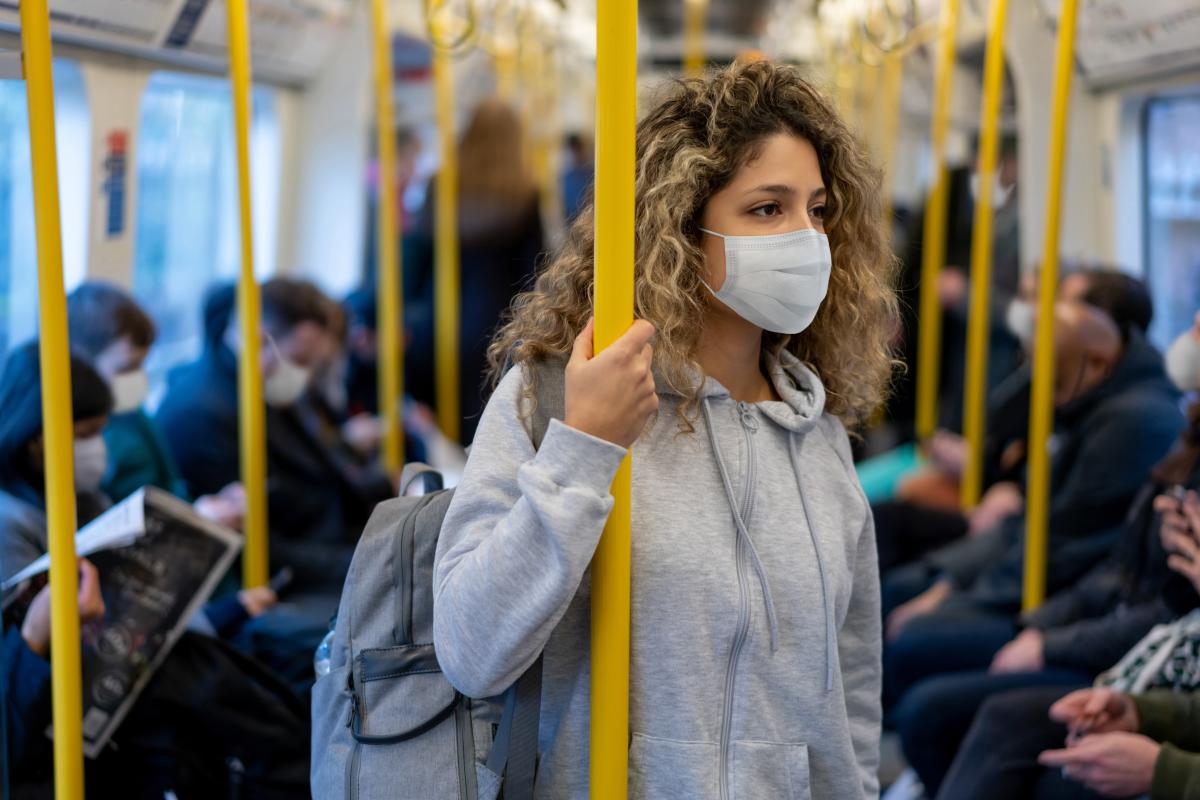
In an unusually quick turnaround for federal politics, a report published in May inspired the introduction of bipartisan legislation just this month that would improve access to public transportation for college students, an investment that is widely supported by higher education advocates.
It all began in January, when researchers at the Seldin/Haring-Smith Foundation set out to answer the question “Do students need a car to attend community college?” What they found captured the attention of lawmakers: only 57 percent of primary community college campuses are within half a mile of a transit stop, even though 99 percent of community college students live off campus. Further, 25 percent of those campuses that aren’t accessible could be made accessible simply by extending an existing transit line.
“What you’re talking about is adding a transit stop to a route that already exists—building one bus shelter or changing the route a little bit,” said Abigail Seldin, CEO of the foundation. “It’s having a bus go two more miles down the road. From an infrastructure standpoint, that’s just so easy. It’s right there.”
The foundation shared its findings both on and off Capitol Hill. The report especially hit home for Higher Learning Advocates, an organization that advocates for solutions that break down systemic barriers and support the success of today’s students, who saw the prospects of working across the aisle to solve “a solvable problem,” said Julie Peller, executive director at Higher Learning Advocates.
The outcome was the Promoting Advancement Through Transit Help to College Act, or PATH to College Act, led in the House by Representatives Conor Lamb, a Democrat from Pennsylvania, and Brian Fitzpatrick, a Republican from Pennsylvania, and in the Senate by Senator Bob Casey, a Democrat from Pennsylvania.
“A lack of reliable transportation should never stop a student from achieving their dreams,” Casey said in a release. “This legislation will improve public transportation so students can pursue education and training beyond high school, allowing them to focus on their education instead of how they’re getting to school every day.”
The bill would offer competitive grants administered by the Department of Transportation to community colleges, historically Black colleges and universities, tribal colleges, and other minority-serving institutions in partnership with local public transit providers. The funds could be used to add stops close to campuses, increase frequency of transit service or subsidize public transportation costs for students.
The bill isn’t that far from becoming a law—the PATH to College Act influenced a provision in the Build Back Better Act, Democrats’ social spending package passed by the House earlier this month, that would establish a $10 billion transit pilot program to connect low-income individuals to community amenities. Institutions of higher education were added to the provision as eligible applicants for the program.
“Seeing how much of the higher education agenda got stripped out of Build Back Better, it’s really cool to see this get slipped into the transportation and infrastructure section,” Seldin said. “I think higher ed is often thought of as being a separate sphere with its own rules and its own challenges, but our students are people, and they have to live in the world and navigate work and childcare and transportation. Attending to their needs through this angle is a nice success to bring for higher ed right now.”
The legislation has the support of 17 higher education organizations, including the Association of Community College Trustees, the Institute for Higher Education Policy, the National College Attainment Network and the State Higher Education Executive Officers Association. The organizations highlighted how access to public transportation can help lead to student retention and completion.
“Spending hours commuting can take time away from studying,” said Piper Hendricks, director of communications and external affairs at the Institute for Higher Education Policy. “Missing class because transit options are unreliable or unaffordable means missed learning. Both hurt students’ chances of college success.”
Carrie Warick, director of policy and advocacy at the National College Attainment Network, said the pilot program would provide an opportunity to study what happens in the communities that receive the grants, because if the grants and implementation are successful, attendance and persistence rates of students on those campuses should increase.
“If that’s the case, it makes a good argument for other local communities to make the same changes and possibly for the federal government to expand the grant program,” Warick added.
A future expansion of the program, if it’s enacted, is ideal for advocates. Lawmakers have proposed a good first step, but it’s just that—a first step, said Edward Conroy, a senior adviser with New America’s education policy program.
“By itself, it’s not going to solve these problems for all of the students identified as not being able to access their campuses easily through public transit,” Conroy said. “But first steps are what gets us down the initial road when it comes to public policy.”
Image Source:
andresr/Getty Images
Disable left side advertisement?:
Is this Career Advice newsletter?:
Magazine treatment:
Trending:
Display Promo Box:
Live Updates:
liveupdates0
Most Popular:
3
Ad slot:
6
In-Article related stories:
9
from Inside Higher Ed https://ift.tt/3d0UU2m
Comments
Post a Comment