Florida Career College to Close Doug Lederman Fri, 01/26/2024 - 03:00 AM Byline(s) Doug Lederman from Inside Higher Ed https://ift.tt/avZRfLi
Image:
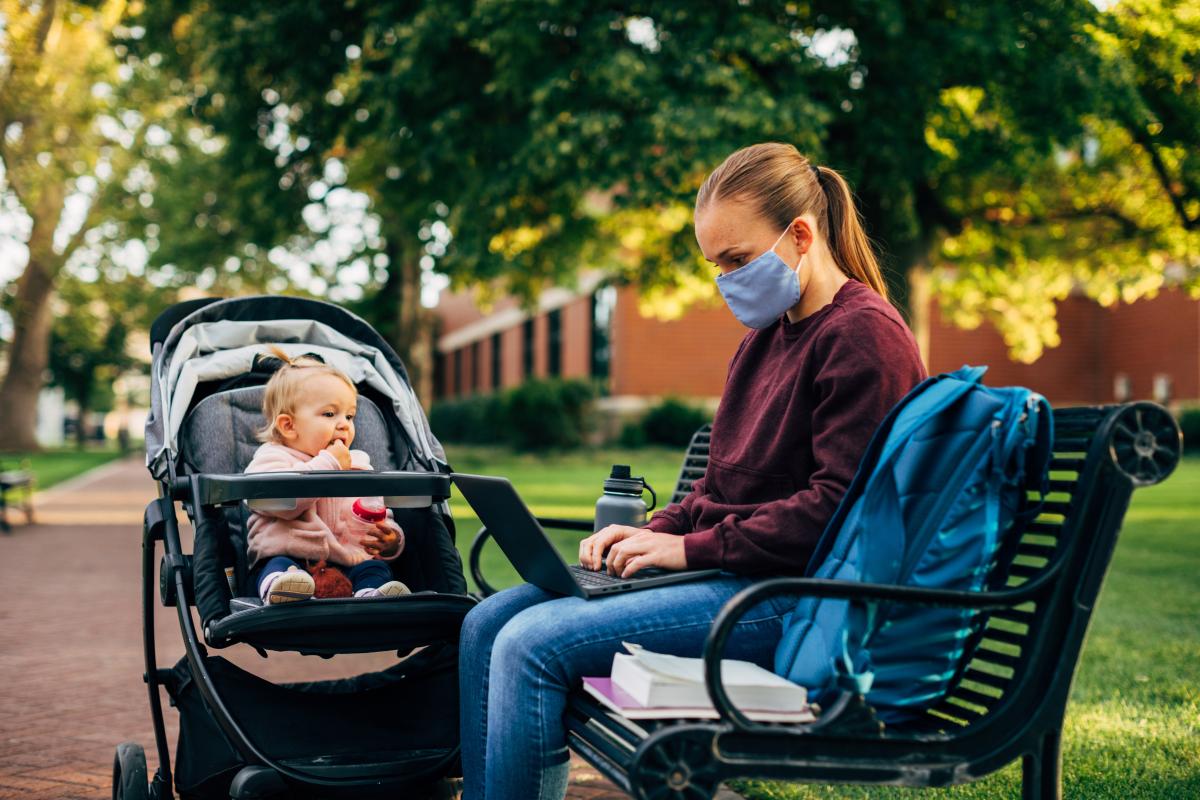
A cohort of four community colleges is collaborating to increase the number of single mothers earning degrees and credentials by 30 percent at each institution and collectively offer new supports to at least 6,000 single moms by summer 2024.
Their initial efforts are outlined in a new report released today by Education Design Lab, a nonprofit that designs and tests college program models to help underserved students.
Central New Mexico Community College, Delgado Community College in New Orleans, Ivy Tech Community College in Indianapolis and Monroe Community College in Rochester, N.Y., were selected by Education Design Lab in 2019 to develop and launch pilot programs by fall 2021 focused on academic supports tailored to single mothers at their institutions. Each college received $50,000 in start-up funds from the ECMC Foundation, a national foundation aiming to improve higher education outcomes among underserved students.
“When I think about this project specifically, I think about reimagination—really being able to reimagine what student supports look like for single moms and for student parents broadly speaking, knowing that higher education was not designed for single mothers,” Rosario Torres, ECMC Foundation program officer, said in the report.
Single mothers make up 10 percent of all undergraduates, according to the report. Eighty-nine percent of single moms attending college are low-income students, and only 28 percent earn a degree or credential within six years. Meanwhile, with every level of education a single mother completes, her likelihood of living in poverty declines 32 percent.
Mary Ann Matta DeMario, a specialist in the institutional research office at Monroe Community College, believes developing targeted supports to serve single mothers can “effect intergenerational change” within their families by helping them earn credentials that can lead to higher wages and disrupt cycles of poverty.
“We aren’t just helping our students who are parents,” she said. “We are helping multiple generations. We are helping the parents get through college. That makes it more likely that their child will go to college.”
Teams at each institution collectively conducted interviews with over 100 single mothers and almost 70 college faculty and staff members to better understand the barriers single mothers face at their individual institutions.
“They told us what they need, and then it was up to us to figure out how to best meet those needs,” DeMario said.
The report details the wide array of supports college administrators and staff members designed based on student feedback.
Ivy Tech, for example, launched a pilot program called Ivy Parents Achieve Success with Support, or I.PASS, on four of its campuses this fall. The program supports a cohort of single mothers by enrolling them in a free course on academic success career planning strategies. Students can also choose weekly whether to take classes virtually or in person. The pilot program includes a weekly study hall, with meals and enrichment activities for children provided, and social events for single parents.
Delgado Community College created an orientation course specifically for single moms, among other specialized supports, to help 2,000 mothers get through their academic programs.
Central New Mexico Community College developed the Luna Scholars Program, a $1,500 scholarship for single mothers, which comes with designated coaches to provide guidance on course selection and the transfer process, and career and skills building. The college also has a single moms Facebook group to create a sense of community among students and to provide them information.
The Facebook group is “a safe environment for single moms who are going through things,” LaToya Turner, an academic coach at Central New Mexico, said in the report. “It was great during the pandemic to get insights from single moms on how to handle virtual schooling for them and their kids.”
Monroe Community College partnered with Child Care Council, an organization which connects single mothers with local childcare options.
The campus has a childcare center, but students who are parents also need these services when the center is closed in the evenings and on weekends, said Kim McKinsey-Mabry, acting vice president of student services at the college. She said one student planned to drop out earlier this month because she lacked childcare but ultimately stayed with the help of Child Care Council.
McKinsey-Mabry said this work has been especially meaningful to her as a single mother who attended Monroe before becoming an administrator at the college.
“Without the support, without that network and without all of the resources laid out for students to be successful, we’re just hoping that single moms like me make it out,” she said. “But now we’re really putting our time, our energy and our efforts in making the commitment to having those resources, doing the research.”
The college also set aside funds to provide emergency aid grants of up to $500 to single moms. About a fifth of its students are parents, and about 89 percent of the college’s single mothers are eligible for the federal Pell Grant.
“Finances are a big issue for our single moms and our larger student parent population,” DeMario said. “Things like a flat tire or car troubles or being a little late on the rent can completely derail their education.”
Many students with children sustained financial losses during the pandemic and struggled to juggle work, assignments and childcare as schools shut down and shifted online. However, DeMario noted that one lesson of the COVID-19 pandemic was that parents “really did flourish under the remote environment, the virtual environment, because it allowed them more flexibility,” which is why so many of the pilot programs include online or virtual course and coaching options.
Nicole Lynn Lewis, founder and CEO of Generation Hope, a nonprofit that helps young parents earn college degrees, said she wished she had these supports about 20 years ago when she was a teen mother with a 3-month-old daughter at the College of William & Mary.
“I didn’t have things like personalized learning and career support,” she said. “I didn’t have at all an inclusive campus culture. I was certainly one of the only students on campus who was going to school and parenting at the same time.”
Lewis believes higher education institutions should collect data on the parenting status of their students so colleges can “apply a student parent lens” to all of their supports and services.
“A lot of times I’ll talk to higher ed leaders who say, ‘Oh, we have a childcare center, so we’ve kind of checked the box when it comes to student parents,’ and that’s like the tip of the iceberg,” she said.
Community Colleges
Image Source:
RichVintage/E+/Getty Images
Disable left side advertisement?:
Is this Career Advice newsletter?:
Magazine treatment:
Trending:
Display Promo Box:
Live Updates:
liveupdates0
Most Popular:
3
Ad slot:
6
In-Article related stories:
9
from Inside Higher Ed https://ift.tt/3lk97fk
Comments
Post a Comment